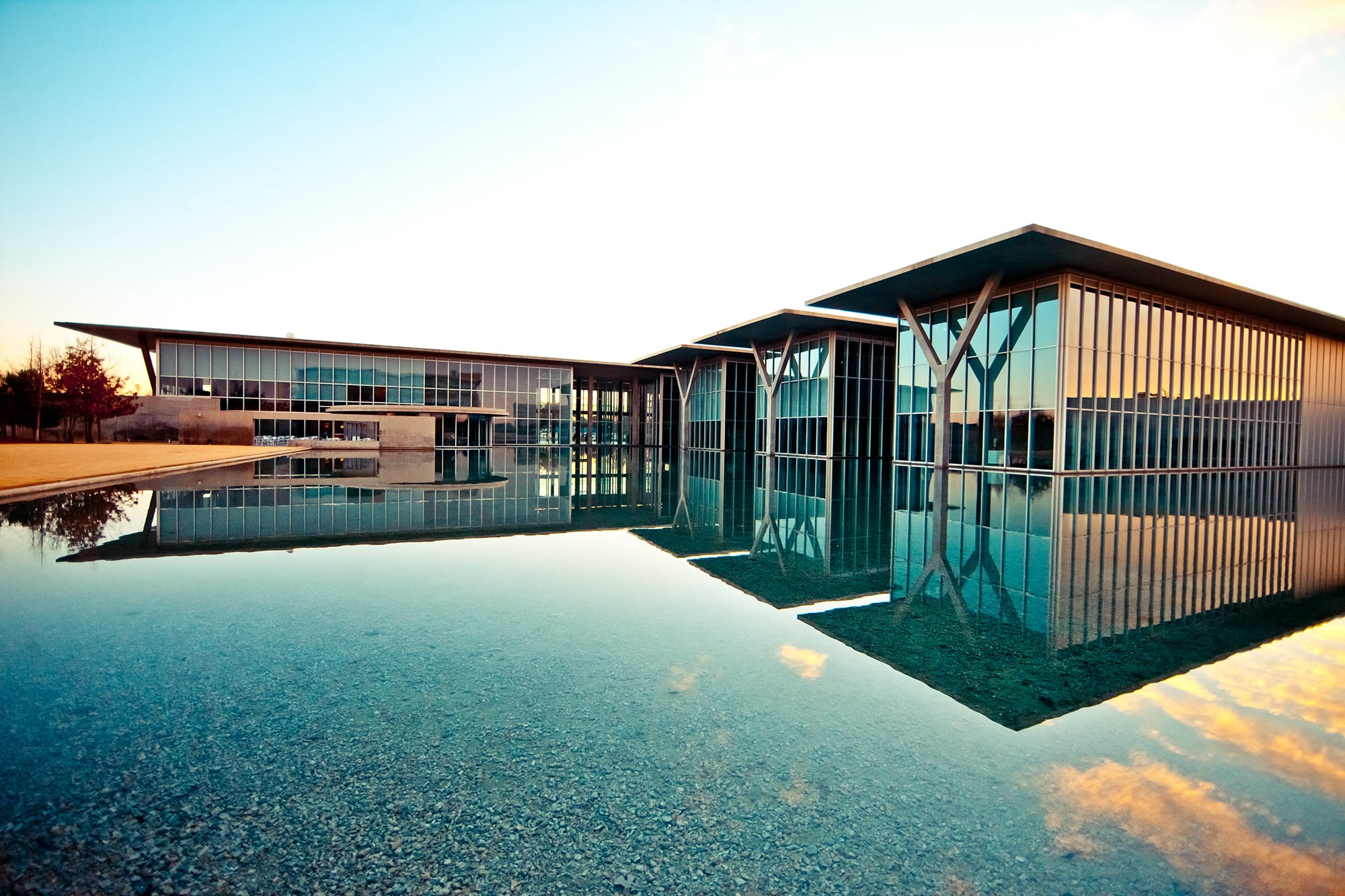
The Modern Art Museum of Fort Worth has played a huge role in placing Fort Worth on the map for Arts. While viewing their gallery and exploring museum is an unparalleled experience, they’re always at work providing outstanding digital and virtual experiences. This just in from the team over at The Modern…
Experience the Modern Art Museum of Fort Worth‘s film and video collection from home with our new program Modern TV. Every other Saturday at 7 pm, free screenings of videos by leading contemporary artists will be livestreamed with a link from the Modern’s website,
www.themodern.org/node/5043.
We invite you to stay connected with us through our online resources and special events. Visit https://www.themodern.org/online-learning-programs and follow us on social media for updates and opportunities.
Yinka Shonibare
Odile and Odette, 2005
July 11, 7-10 pm CST
Yinka Shonibare’s Odile and Odette, 2005, portrays an account of Tchaikovsky’s famous ballet Swan Lake. The ballet tells the story of a prince who must choose between the good swan, Odette, and the bad swan, Odile. Traditionally, the two roles are danced by the same ballerina, with Odile in black clothes and Odette in feminine, finer garments. In Shonibare’s Odile and Odette, one black and one white ballerina dance the parts on either side of an empty gold frame, mirroring each other’s movements. Both dancers wear pointe shoes and tutus of batik cloth, a fabric associated with the European colonization of West Africa. By editing the film so that the two women perform interchangeably, as equals, Shonibare nods to the fundamentally erroneous narratives that fuel colonialism and racism. “The roles – one as the ego and one as alter – in my version are more ambiguous: you would not necessarily be able to tell who is the bad swan and who is the good one,” says Shonibare.
Robert Smithson, Spiral Jetty, 1970
and
Melanie Smith, Spiral City, 2002
July 25, 7-10 pm CST
This installment of Modern TV brings together two distinct but connected filmic works in the Modern’s permanent collection: Robert Smithson’s Spiral Jetty, 1970, and Melanie Smith’s Spiral City, 2002.
Robert Smithson is best recognized for earthworks such as Spiral Jetty, 1970, a swirling 1,500-foot-long landmass comprised of rock, dirt, and salt that juts out from the shore into the Great Salt Lake. Known for disappearing and reappearing as the water level of the lake fluctuates, the work is a testament to the artist’s interest in environmental shifts and unstable situations – ideas that continue to have great urgency today. The film Spiral Jetty, a “portrait” of the monumental earthwork, is an artistic endeavor of its own identity. Featuring voiceovers by Smithson and juxtaposing the industrial violence of Spiral Jetty’s construction with the peaceful beauty of its surroundings, the film provides an ambivalent, disorienting perspective of the artist’s iconic work.
Melanie Smith’s Spiral City, 2002, is a response to Smithson’s Spiral Jetty earthwork and related film. Her video transforms a brief aerial journey above the streets of Mexico City into a meditation on history and modernity, time and space, order and chaos. Founded on an island in Lake Texcoco nearly 700 years ago, Mexico City has grown into one of the world’s most crowded and polluted urban areas. Filmed from a helicopter as it climbs in widening spirals, Spiral City confronts the city’s unending grid of streets and buildings. As Spiral Jetty testifies to the entropic processes of natural materials, Spiral City suggests that the urban environment is subject to crystalline-like patterns of growth and erosion.